The Community Comes First
The ethos behind everything we do in Bairnsdale
Every decision here gets made the same way: what does this do for the people who walk through the door? We're building the place Bairnsdale didn't have, and keeping it open to everyone who needs it.
See what we stand for →
We built the place around the people
There was nowhere in Bairnsdale for young people to go, so we built somewhere - and everything since has been in service of keeping it standing and keeping it open.
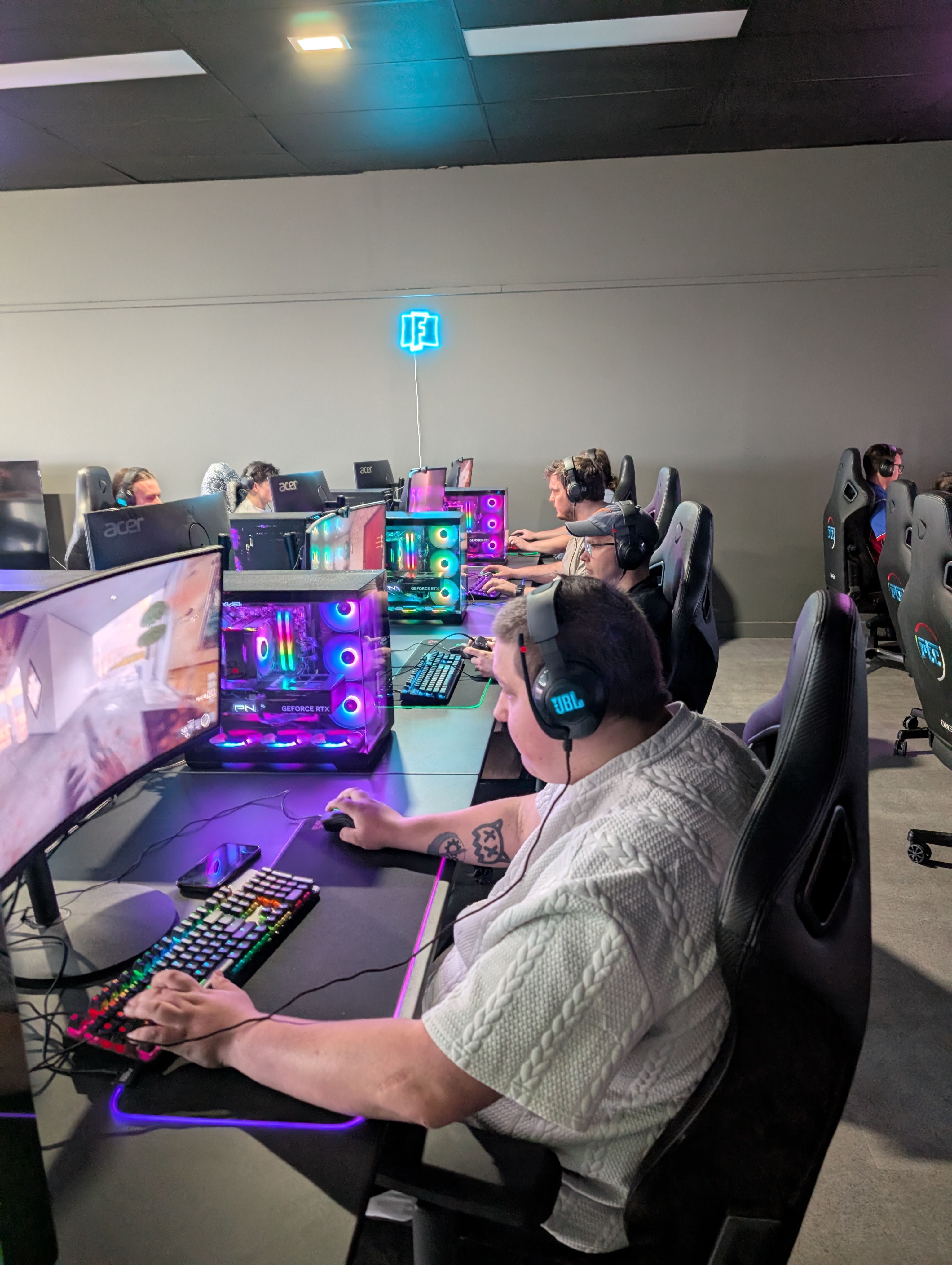
Everything else follows from that. It's why supported sessions and casual gaming generally share the same room, why casual gaming is priced to be affordable, and why the first question about anything new is whether the community needs it.
We think you can tell the difference when you walk in. That's the only proof of an ethos that really counts.
Six things we don't compromise on
Each of these shows up in the ordinary running of the place, not just on a wall.
Support happens in the open
Most of our NDIS supports run in the same room as casual gaming, D&D nights and after-school clubs. Some sessions are closed, and some run outside open hours - because that's what the participant wants, not because support needs hiding.
Everyone belongs here
Neurodivergent young people, casual gamers, families, older adults learning their phones. No plan, no diagnosis and no membership required to walk in. Nobody is a guest in somebody else's program.
Start with what someone loves
We build around a person's genuine interests and strengths, so engagement is never the battle. The confidence, the friendships and the skills come along with the game - they aren't the price of admission to it.
No idea is too far-fetched
When somebody brings us an idea, the instinct here is to work out how to make it happen rather than why it can't. Plenty of what runs at the hub started as something that sounded far too ambitious for a regional town - and then we built it anyway.
We'd rather collaborate than compete
If another organisation already does what somebody needs, we'll say so and point them there - a young person in the right place matters more than a young person in ours. We work alongside the rest of Gippsland, not against it.
Cost shouldn't decide who comes
Money is the quietest way a space filters people out, and we work to keep it from deciding who gets to be here. Alongside the paid programs we do our best to run free ones too, so there's always a way in.
How inclusion actually works here
A community space only works if people can get through the door - and want to be in the room once they have. Four ways we make sure of both.
Anyone can walk in
Casual drop-in gaming, after-school clubs, D&D and community events are open to everyone - no referral, no membership, and nothing to do with disability funding.
Free programs alongside the paid ones
We work to keep what we run within reach of an ordinary family, and we do our best to have free programs running alongside the paid ones - so somebody who can't pay this week can still walk in.
If it doesn't exist anywhere, we build it
When somebody needs a way in that nobody in the region offers, we'd rather make one than shrug. Most of what runs here started exactly that way - and when it does already exist elsewhere, we point people to the other organisations we love instead.
Two ways in, one place
Come through our NDIS programs if you have funding for them, or through community programs that are open to anyone. It's the same venue and the same team either way, and plenty of people move between the two.
What this looks like day to day
The test of a value is whether you'd notice it if you walked in unannounced.
Same room, same time
A supported session and a casual drop-in run side by side. What's different isn't the room - it's the worker sitting alongside a participant, and that support is the part their NDIS funding pays for.
Support without spotlight
Our team supports people without ever making them feel like they need supporting. Most of the work looks like sitting in and playing along.
The same faces each week
Consistency is part of the support. For a lot of the young people here, a familiar person who turns up reliably does more than any program design.
Room to just be there
Not everyone arrives ready to join in. Sitting in the corner watching for a few weeks is a perfectly good way to start, and plenty of people have.
The ethos decides the team, too
A community-first place only works if the people in it are from the community. Our team is neurodivergent or has close lived experience of disability through family - that's the most deliberate decision we've made, and it means young people are supported by people who genuinely get it rather than people who've only read about it.
So for support roles we hire for lived experience, warmth and a genuine love of games ahead of anything on a CV. Formal qualifications are welcome and sometimes required, but they're rarely what makes the difference on the floor. And the pathways run both ways: participants, volunteers and trainees have all become paid members of our team.
There's no formal application to start
Tell us who you are and what you're interested in - a CV is optional, and not having one has never ruled anybody out. Our jobs page has the roles we're looking to fill right now.
Questions we hear about how we work
Answered straight.
What are ESports Collective's values?
Community first; support happens alongside the community rather than tucked away; everyone belongs in the space regardless of plan or diagnosis; we start with a person's genuine interests and strengths; no idea is too far-fetched to try; we'd rather collaborate with other services than compete with them; and cost shouldn't decide who gets to come.
What does community-first actually mean?
That we ask what the community needs, then work out how to do it. If another organisation already does the thing well, we'll refer somebody on and be glad to; if it doesn't exist anywhere, we build it. It's why we work to keep what we run within reach, why we do our best to have free programs running alongside the paid ones, and why anyone can walk in without a referral or a membership.
What does support without segregation mean in practice?
Support isn't tucked away by default. Most NDIS supports are delivered in the same community space everyone else uses, at the same time, with the same staff, so participants are supported in a place they've chosen to be part of rather than one they've been sent to. Where somebody would rather have a closed session, or come in outside open hours, we arrange that - it's their call to make.
Do I need an NDIS plan to come here?
No. Casual drop-in gaming, after-school clubs, Dungeons and Dragons, birthday parties and community events are open to the whole community, and most people here have nothing to do with the NDIS at all. Our NDIS supports run in the same venue, and what that funding pays for is the support itself - the trained worker alongside a participant, working towards their goals - not the venue or the gaming.
What if someone isn't ready to join in?
That's fine, and it's common. Sitting in the room watching for a few weeks is a perfectly good way to start. Nobody gets pushed into a session before they're ready for it.
Who do you hire?
For support roles, people with lived experience of neurodivergence or disability - their own or through family - who genuinely love games and can meet people where they are. Qualifications are welcome but rarely the deciding factor, and participants, volunteers and trainees have all become paid staff.
Come and see for yourself
The best way to judge an ethos is to stand in the middle of it. Drop in to 58 Macleod Street any afternoon, or get in touch.
or call 0485 835 536