 PDF · 4 pp
A small business built on what they love
Supported Micro Enterprise
NDIS supported self-employment in Bairnsdale
For some participants the best work isn't a job, it's a business shaped entirely around them. We build a real micro enterprise around what someone is already into, and work alongside them at every step so they grow into running it themselves.
Talk to us about getting started →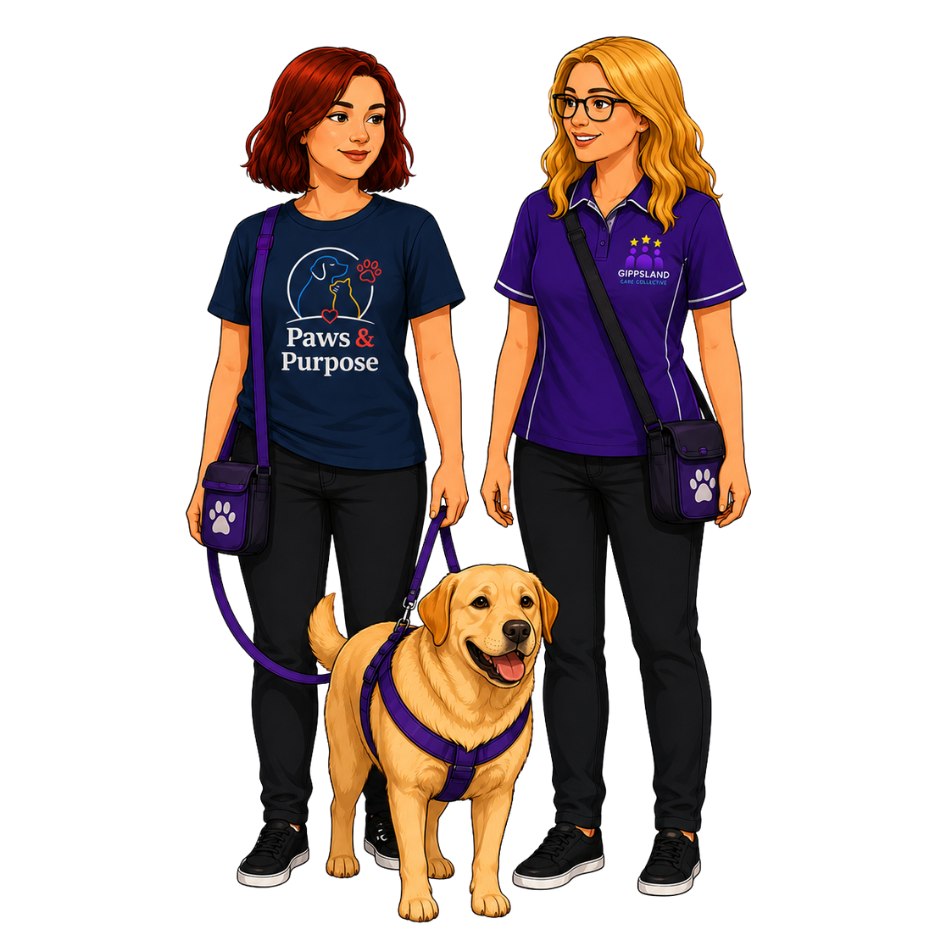
The concept
A business built around the person
Their interest, their hours, their pace of growth - we meet them where they are. We work alongside them at every step, sharing what we know so they grow into running as much of it themselves as they can. This is NDIS supported self-employment, run from our hub on Macleod Street, Bairnsdale.
It sits alongside our Supported Work program, not instead of it. Supported Work suits participants who do well inside an existing workplace. A micro enterprise suits participants who'd thrive running their own thing. Same provider, same staff who know them, a different door.
ABN, income and customers in their name. A business, not a placement.

Why this works
How does the business serve the person?
Six reasons this model works where placements haven't.
Built around their interests
The business starts from what the participant is good at, and shapes itself around them, not the other way around.
Hours and pace that work
Three hours on a Tuesday morning. A quiet pace. The business serves the person, not the clock.
Real income, real ownership
ABN, income and customers in their name. A business, not a placement, and the difference matters.
Skills that compound
Quoting, pricing, customer talk, invoicing. Capacity learnt by doing, not by being taught.
A cohort, not a solo run
Participants share the hub and meet others doing similar work. The community is shared.
A reason to leave the house
A weekly rhythm with people who expect them. Structure, without it being a placement.
What keeps it viable
The hub does the heavy lifting
Three things make each enterprise sustainable from day one.
01
NDIS funding is the base
Capacity-building hours pay for the time we spend alongside the participant. Everything else builds on top of that, so the support is funded and the business doesn't have to carry it.
02
A hub, a toolkit and our networks
A physical hub to work from, with computers, desks, internet and a space to meet customers. A library of tools to borrow - mower, vacuum, pressure washer, 3D printers, a market gazebo - so they can start before they've saved for their own. And marketing through our networks: we open the doors, the participant walks through them.
03
Smart systems doing the admin
Quoting, customer SMS and invoicing run on systems we've already built and can share across every participant. The participant is always supported - the systems just handle the fiddly, repetitive work that stops most small businesses, so our time goes into the parts that actually build capacity.
Starting points
What kind of business could it be?
These are the easiest places to start - clear, repeatable, and built around skills participants can grow into.
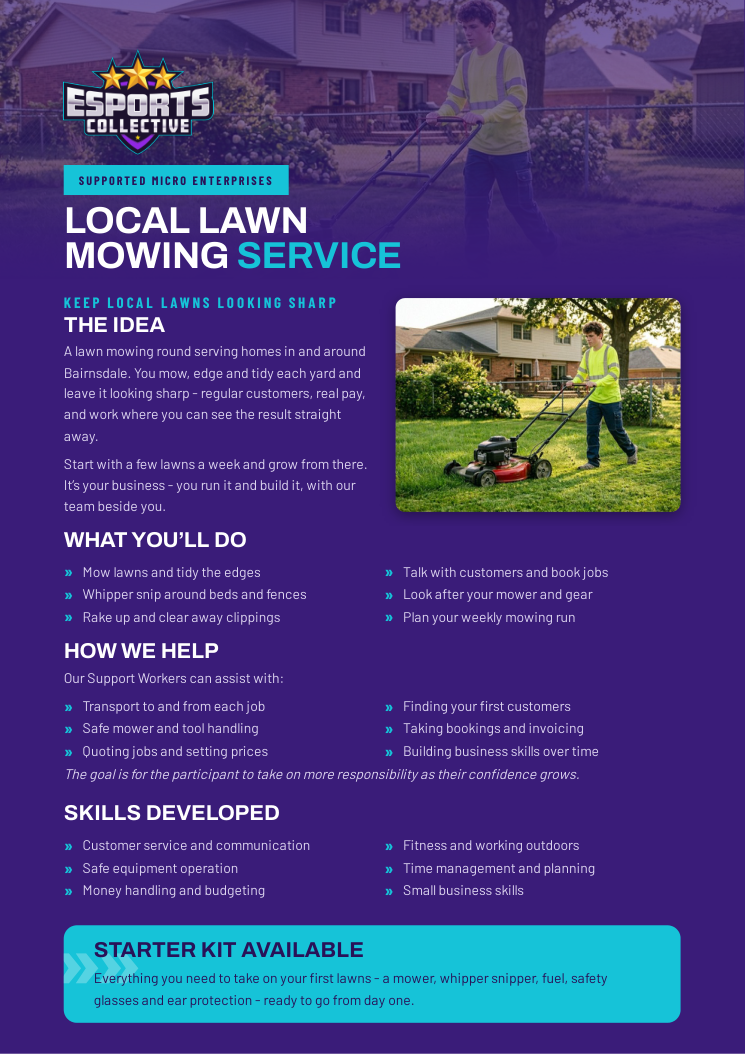
Lawn mowing
A fixed weekly route - mow, edge and tidy, yard by yard.
Car washing
By appointment - a proper, thorough wash people book in for.
3D printing
Keyrings and commissioned pieces, printed to order.
Bin collection
A weekly subscription - bins out and back, like clockwork.
Laundry service
Pickup and return - washed, folded and back the next day.
Tech help visits
Home visits for older locals - patient, one-on-one support.
Dog walking
A regular client base and a steady daily walking round.
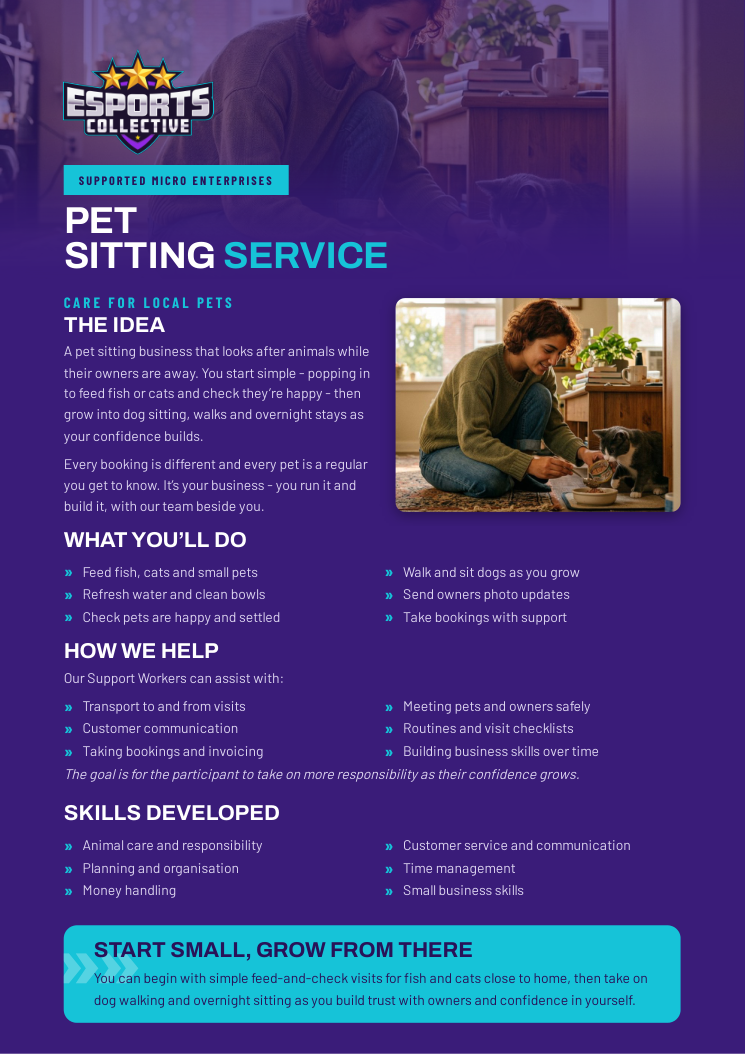
Pet sitting
Drop-in visits to feed, check and settle pets while owners are away.
The participant picks the one that fits. Or another one entirely - the list is a conversation starter, not a menu.
See the flyers
PDF · 4 pp
 Flyer
Flyer
 Flyer
Flyer
 Flyer
Flyer
 Flyer
Flyer
Flyer previews
Real, participant-run ventures we've built flyers for - click any cover to open the full PDF, Download to save a copy, or grab the Easy Read version. Each one is a starting point, shaped around the participant who runs it.
PDF · 4 pp
Flyer
Micro Enterprise
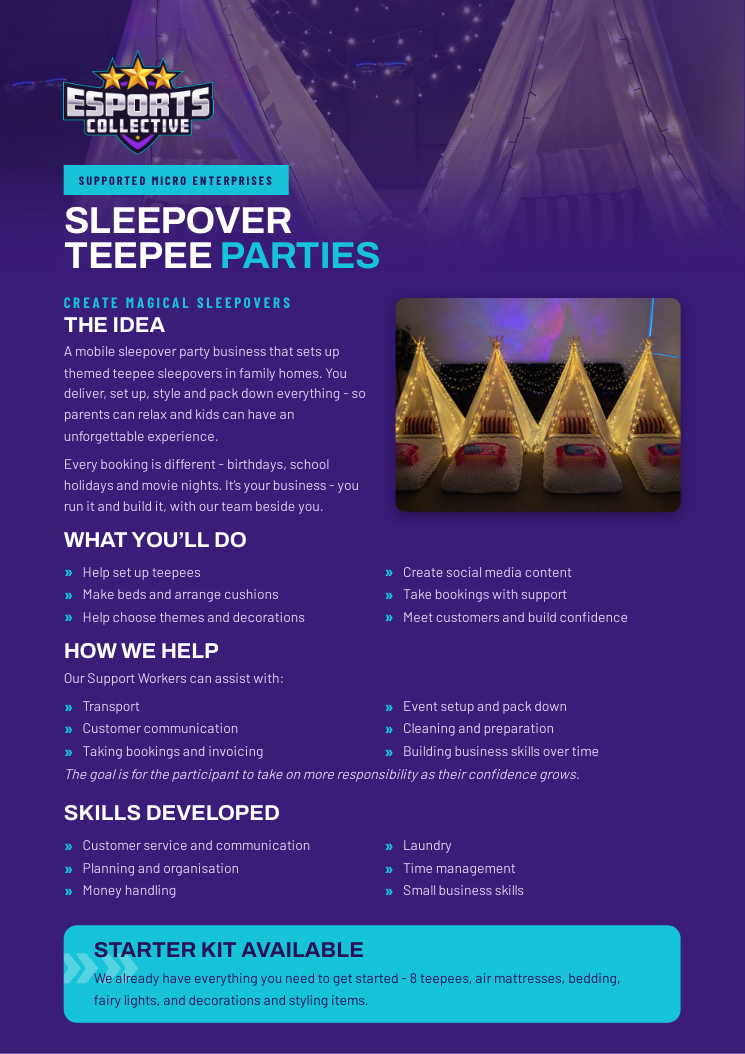
Sleepover Teepee Parties
A mobile sleepover party business - setting up themed teepee sleepovers in family homes, delivered, styled and packed down with support beside you.
Flyer
Micro Enterprise
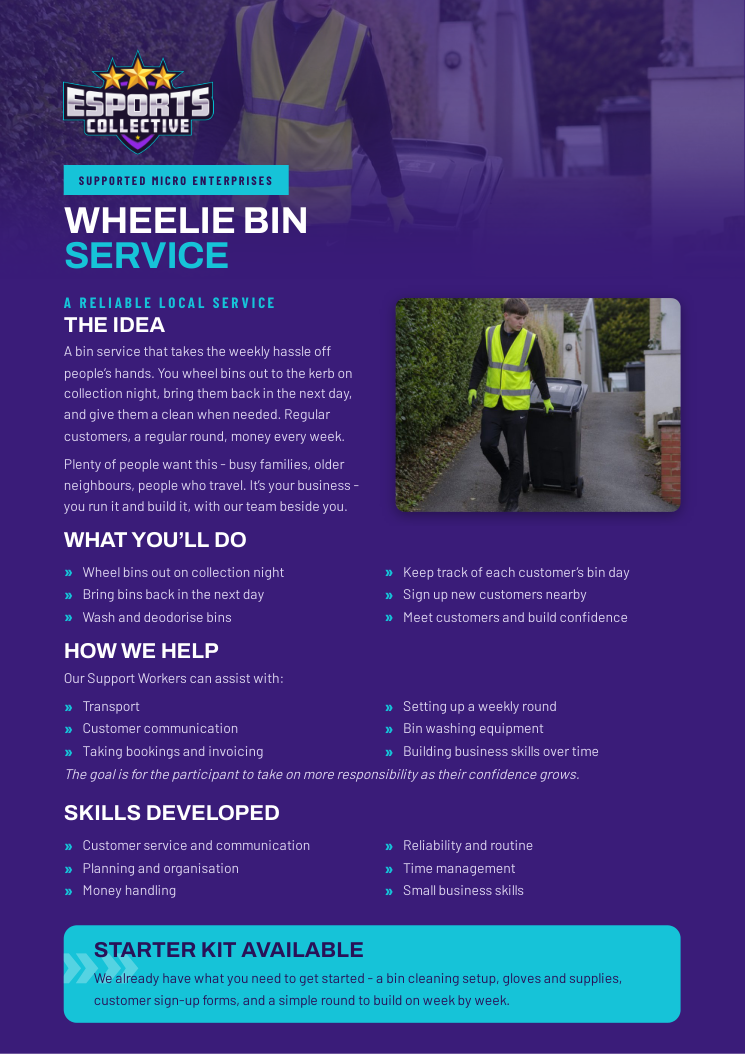
Wheelie Bin Service
A reliable local bin service - wheeling bins out on collection night, bringing them back the next day, and washing them when needed. A regular round and money every week.
Flyer
Micro Enterprise
Local Lawn Mowing Service
A lawn mowing round in and around Bairnsdale - mow, edge and tidy each yard and leave it looking sharp. Start with a few lawns a week and grow from there.
Flyer
Micro Enterprise
Pet Sitting Service
A pet sitting business that looks after animals while their owners are away - starting simple with feed-and-check visits, then growing into dog walks and overnight stays.
Questions
Micro enterprise questions we hear most
Honest answers about how supported self-employment works.
What is a Supported Micro Enterprise at ESports Collective?
It's NDIS supported self-employment - a real small business built around a participant's interests and run at their pace, with ESports Collective working alongside them at every step from our Bairnsdale hub. The ABN, income and customers are in the participant's name.
How is a micro enterprise different from the Supported Work Program?
Supported Work places participants in paid roles inside ESports Collective's own workplace. A micro enterprise is the participant's own business, shaped entirely around them. Same provider, same staff who know them - a different door.
How is it funded?
Capacity-building hours fund the time we spend alongside the participant - that's the base everything else builds on. The hub, tool library and marketing support keep the business viable without the participant carrying those costs.
What does the participant actually have to do?
As much as they can, growing over time. We share what we know - quoting, pricing, talking to customers, invoicing - so they build real capacity by doing, with our systems handling the repetitive back-office work.
How do we explore whether it's a fit?
Get in touch. Call 0485 835 536 or send an NDIS referral, and we'll have an honest conversation about the participant's interests and whether a micro enterprise or Supported Work is the better door.
Their business, our backing
If someone you support would thrive running their own thing at their own pace, let's talk about what that could look like.
Make an NDIS referral →or call 0485 835 536